
The historic old town, which is popular with locals and tourists alike, is actually a bit choppy at almost any time of day and on any day of the week. This was particularly evident to me this summer on a literary city walk organized by the Euregio Meuse-Rhine Literature Office, which I was allowed to accompany with texts: At some of the places I had chosen as reading landmarks, I could barely understand my own words. All the more surprising then the peace and quiet under an apple tree - in the middle of the city and yet completely hidden. Are you looking for this and other islands of peace in the city center? Psst - just follow me!
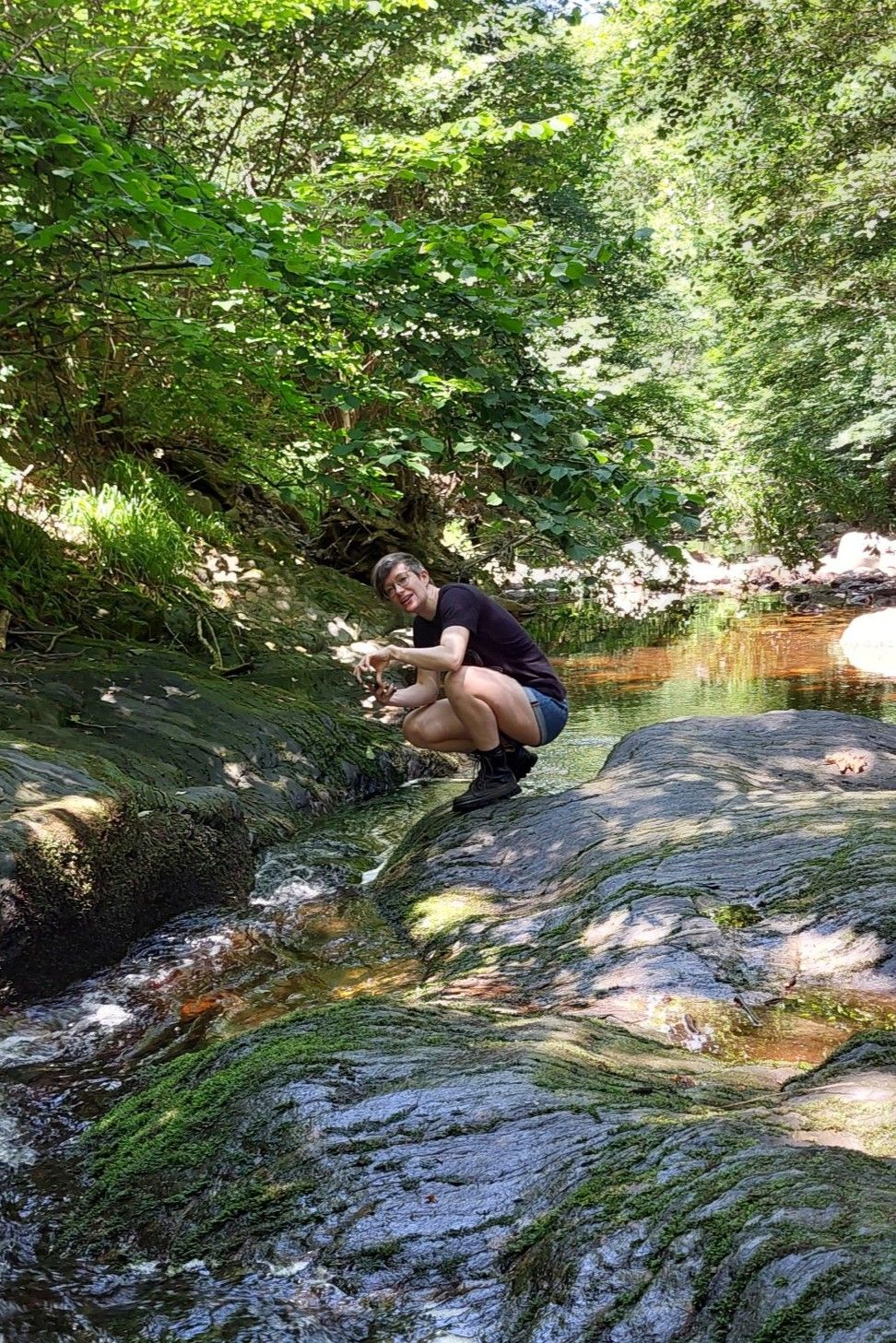
Judith C. Vogt
lives with her family in Aachen-Eilendorf, where she writes and translates novels and non-fiction texts. To balance out her day-to-day writing, she goes on extensive cycling and hiking tours in the Euregio region and is always fascinated by new perspectives and insights.
Books and coffee

The epitome of peace and quiet? Withdrawing from the world for half an hour with a good book and a hot drink!
The literary café Vers an der Barockfabrik impresses with its literary atmosphere and delicious hot drinks: here you can feast (cakes, quiche and of course excellent coffee and tea) and read, because browsing through the constantly growing reference library with books made in Aachen is expressly encouraged. On many evenings, there are a variety of literary events, from author readings to book clubs.
📖 Kissed by the muse? If you write an ode to tranquillity in the café during the day, for example, you can read it aloud at the Lyriktreff on the third Wednesday evening of the month.
If you'd rather take the book you read over coffee home with you, you can buy it at the Artemis bookshop (see photos), whose range consists mainly of queer novels and feminist non-fiction in English, but which also has a well-curated German-language selection. The lovingly designed little bookshop itself is reminiscent of the setting of a "cozy" novel - you can browse extensively on the seating, and hot drinks are also available here.


Relaxation in the water


Fun at the spa - Charlemagne is said to have had fun in Aachen. According to one of the "Charlemagne-centric" founding myths, the great Franconian's horse scraped a hot spring out of the ground with its hoof, whereupon the emperor said to himself: this is a good place to be - and slipped into the thermal waters to soothe his aches and pains of old age. Of course, we locals know that Aachen didn't just become a spa resort in the early Middle Ages: The Romans were already soaking in the hot water here.
This is still possible today, of course in the Carolus Thermenwhich, incidentally, are fed by one of the hottest springs in Europe. If you want to treat yourself to some special peace and quiet here, you should definitely visit the extensive sauna world and relax in the steaming pools, by the warm fireplaces or on the loungers in the reading room in cold weather.
Hot water has the Elisabethhalle in the city center, but it does offer a little trip back in time: Öcher*innen have been bathing here in the Art Nouveau baths since 1910 - Asklepios rules over the corridor with his healing staff, Neptune is enthroned above the pool. Everything has been lovingly preserved, from the marble changing rooms to the wrought-iron railings of the gallery - right through to the second, smaller swimming pool for women, as bathing here was segregated by gender until the 1950s. Today, the smaller swimming pool is reserved for school classes.
🕰️Wer If you want to swim in this quiet historical gem, you should check the opening times beforehand - the Elisabethhalle is currently only open in the mornings!
Under the open sky
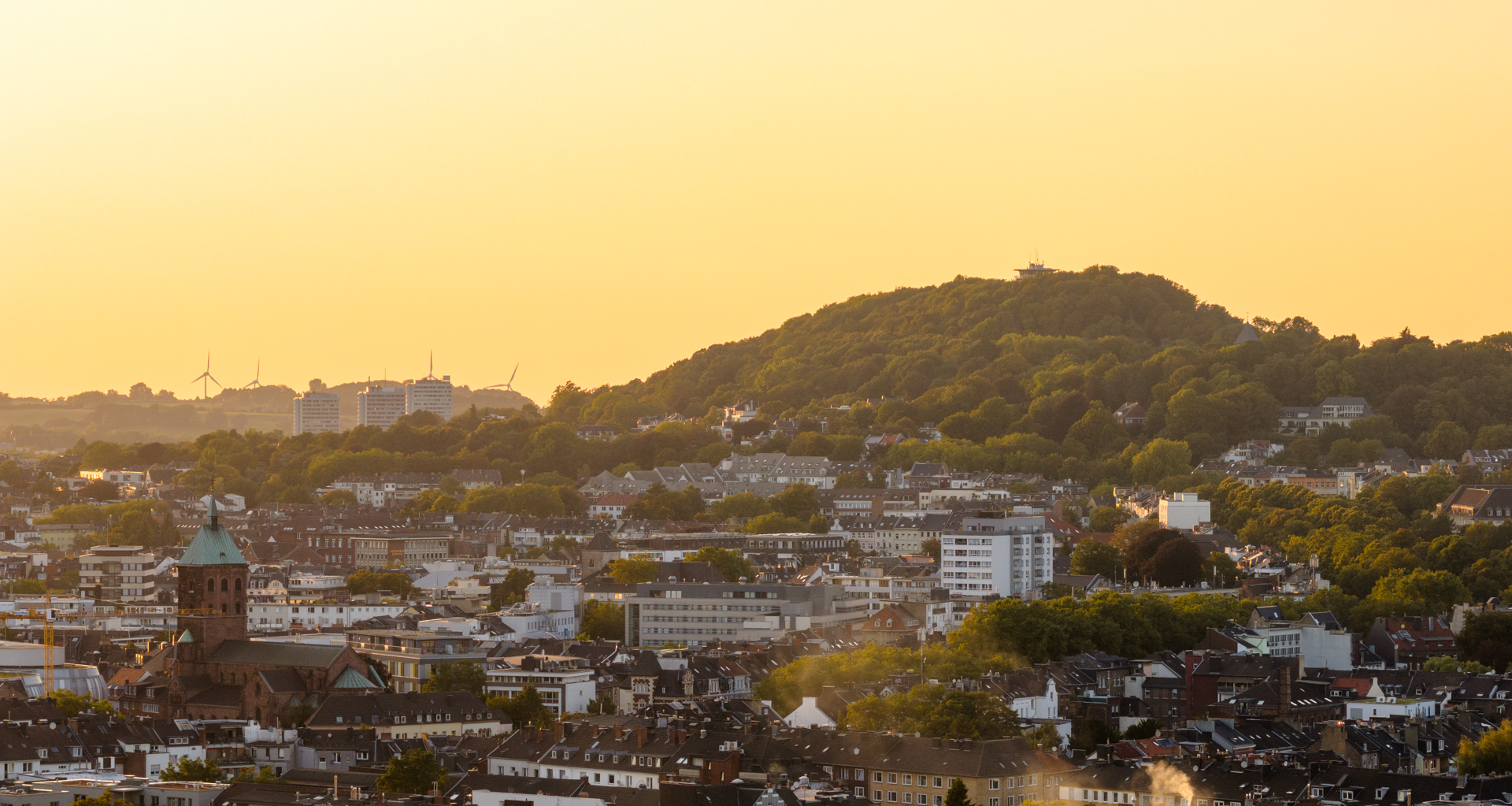
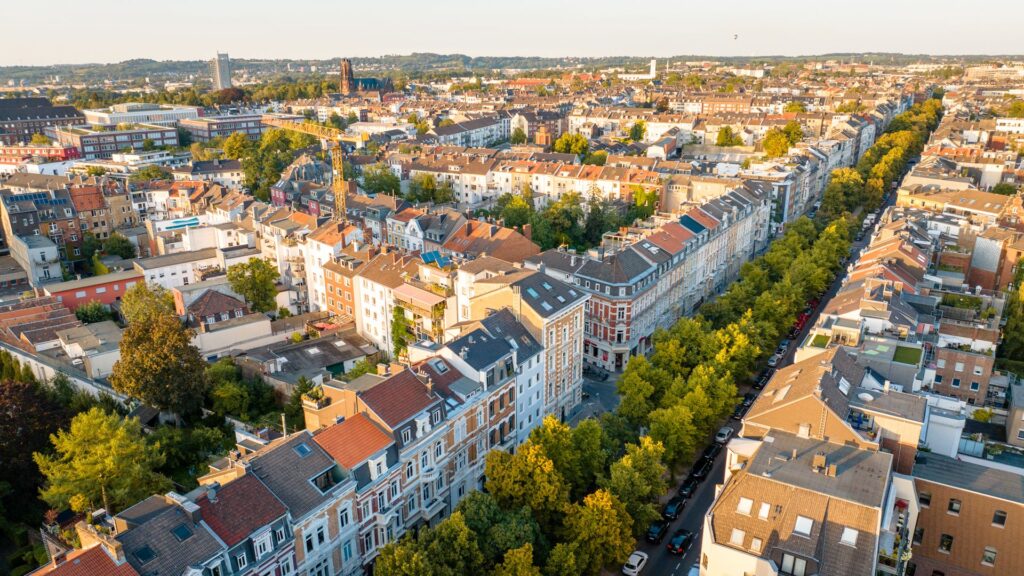
The hot springs are not the only European record that Aachen holds: The Lousberg, located north of the city center (see cover picture), is the first landscape park in Europe initiated by citizens. The 264-metre-high hill was planted as a park in 1806. Its name probably comes from "lugen", meaning to look, because you have a wonderful panoramic view from the numerous secluded walking paths. For example, the sunrise: the bluestone obelisk at the south-eastern end of the mountain offers early risers the most beautiful sunrise view in the city.
🌇 If you're looking for a good view of the sunset, you'll find it at the Haarberg viewpoint, but you should take the bus there from the city center!
If you want to escape the city a little, you can take the bus to the Waldfriedhof cemetery (bus stop of the same name) and take a walk between the Bismarck Tower and Aachen Forest - perhaps finish off on a cold day with a hot drink at Forsthaus Schöntal or the Bismarck Tower restaurant? Those who find the peace and quiet too much can use the newly installed "Mullebank", which the Senior Citizens' Council and the City of Aachen have set up as a meeting place (there are several in Aachen, one of which is located in the middle of the park). Taking a seat on one of these benches, which are marked with a brass plaque, signals: "Sit down with me, let's have a chat."
Let the good Lord be a good man


The quietest places of all: churches! Whether you are a believer or not, churches offer those who seek them a quiet place to take a deep breath. Although in Aachen Cathedral the hustle and bustle of the city center also finds its way into the octagon as a stream of visitors - which is not to say, of course, that those seeking peace and quiet are not in good hands in the cathedral. But if you want to listen to yourself with fewer people around you, you can visit the church of St. Foillan (see photos above and cover picture) on the other side of Münsterplatz - incidentally the only church in Germany named after the early medieval saint from Ireland (or Scotland) who died in Belgium. Also noteworthy about St. Foillan: the church suffered extensive damage during the Second World War and now consists of older architecture on one side and post-war architecture on the other.
🧘The Protestant parish of Aachen offered a yoga service in the Church of Reconciliation for the first time at the beginning of 2025 - but I have not yet been able to find out whether this concept will be continued.


The hidden gem in the middle of the city center mentioned in the introduction is hidden behind convent walls: diagonally opposite Elisabethhalle is the convent of the Poor Sisters of St. Francis (see photos above), who are also known as the Schervier Sisters after the founder of their order. The sisters' field of activity is social and charitable work, for example regular meals with and for homeless people. The convent's small chapel is open to the public, but if you want to visit the convent garden with its wonderfully peaceful seating area around the apple tree, you have to register or attend one of the events offered by the sisters - such as bread baking seminars, film days and bookbinding courses.
If that's not a good way to find peace and quiet!
Have you seen these posts yet?

Mail from Aachen
Sign up for our newsletter and get a little piece of Aachen—no matter where you are!


